

Off-Page SEO Tactics That Work in 2026: Links, Mentions & Entity Authority
Off-page SEO in 2026 isn't just link building — it's earning third-party mentions, building entity authority, and getting cited inside AI engines. Six tactics that work, three that don't, and the right priority order.

On this page · 6 sections
TL;DR
Off-page SEO in 2026 has split into two parallel disciplines: traditional link-and-mention work for Google rankings, and entity-authority work for AI citations. Both compound. Doing one without the other leaves real visibility on the table.
- Links — earn via original content + outreach; avoid PBNs, paid schemes, scholarship farms
- Mentions — unlinked brand mentions in trusted publications matter for entity authority
- Reviews — Google, Yelp, industry-specific platforms; sustained velocity, not bursts
- Entity authority — Wikipedia (where notable), Wikidata, Knowledge Graph entry
- AI citations — trusted publications + Reddit + YouTube + structured comparison content
Off-page SEO covers everything you do to influence search rankings outside your own website — links earned from other sites, brand mentions in third-party content, citations in trusted directories, reviews on platforms like Google and Yelp, and increasingly, mentions inside AI-generated answers. In 2026, off-page SEO has split into two parallel disciplines: traditional link-and-mention work that influences Google rankings, and entity-authority work that influences whether AI engines (ChatGPT, Perplexity, Gemini, AI Overviews) cite your brand.
The good news: the same tactics largely move both surfaces. The bad news: low-quality tactics that worked in 2020 have stopped working in 2026 and now actively harm performance. This guide covers six off-page tactics that compound in 2026, three that have stopped paying off, and the priority order for deploying them.
Why off-page SEO matters more in 2026, not less
Common belief: "AI search is killing off-page SEO." Reality: AI engines weight third-party entity signals more than Google does on many queries. When an AI engine decides whether to cite your brand, it cross-references mentions of your business across the web — the cleaner and more consistent that entity footprint, the more confident the AI engine is in citing you. Off-page work is the input layer to both Google's algorithm and AI engines' grounding.
Three data points from our 2026 client work:
- Our Bergen County NJ ADA mobility client gets cited in Google AI Overviews and ChatGPT after 12 months of focused off-page work — review velocity, third-party mentions, citation cleanup. Pure on-page wouldn't have done it.
- A Colorado Springs law firm went from 15 to 88 monthly GBP calls largely through review velocity (a textbook off-page tactic) plus citation NAP cleanup.
- A US health/wellness brand 3×'d organic conversions after off-page work focused on vertical-publication mentions and original-research syndication.
Six off-page SEO tactics working in 2026
1. Earn links through original content + outreach
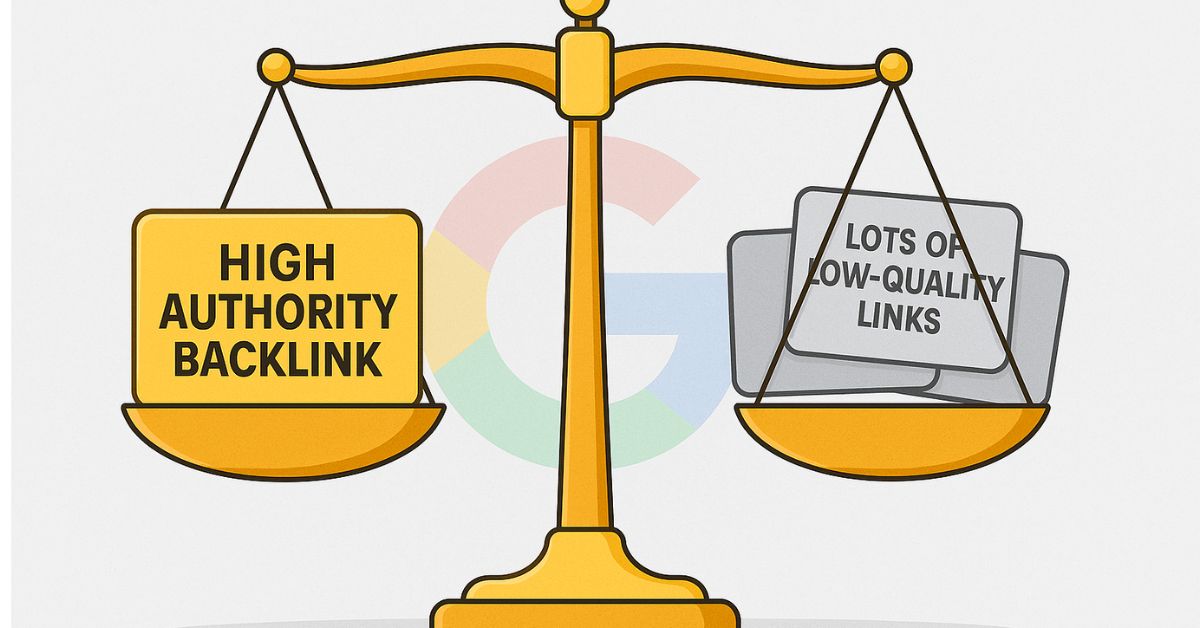
The slowest, most durable tactic. Publish content that genuinely earns links — original research, deep how-to guides, comparison content, statistics-led pieces — then do outreach to vertical publications and journalists who cover your space. Pitch a quote, a data point, or a chart they can embed with attribution. Slow to ramp; compounds for years.
This is the only link-building tactic that survives Google's evolving spam detection AND gets recognized by AI engines as a trust signal. Everything else is supplementary.
2. High-quality niche edits (link insertions)
A niche edit is an existing relevant article on a trusted vertical publication that gets updated to include a link to your content. Different from a guest post (which is new content); different from a directory submission (which is structured). Done right, niche edits are some of the most durable, defensible links you can build.
Done wrong (low-quality PBN-style sites, irrelevant insertions, paid via shady networks), they're a fast path to a Google penalty. The discipline: only on real vertical publications, only when the link genuinely fits the existing content, and only with editorial relationships that can be defended in a manual review.
3. Selective guest posting on real publications
Guest posts on relevant vertical publications — not "guest posting networks." Pitch a real publication in your vertical, propose a substantive piece tied to your expertise, write something genuinely useful, get the byline + bio + 1-2 in-content links. The bar is high (most pitches get rejected), which is precisely why the links carry weight.
The "submit a guest post to 100 sites" automation is dead. One guest post on a real industry publication beats 50 placements on generic content networks.
4. Citation building + NAP consistency (especially for local)
Already covered in depth in our local SEO citations guide. The short version: Tier 1 data aggregators (GBP, Bing Places, Apple Business Connect, Facebook), top 10 general directories, vertical-specific citations for your industry. NAP consistency across all of them. This is foundational for local + a major input for AI engine entity confidence.
5. Review velocity + management
The most underweighted off-page lever. A business going from 0-1 reviews/month to 5/month consistently for 6 months typically jumps 5-10 positions in the Map Pack and gets cited noticeably more in AI Overviews for local intent queries. Reviews are now an entity signal beyond just Map Pack ranking.
Set up review-request automation tied to ops events (job completion, invoice send). SMS asks convert at 25-40% on a polite ask within 24 hours of the service. Never pay for reviews — Google's 2026 detection catches incentivized reviews with high accuracy.
6. Third-party brand mentions (with or without links)
This is the 2026 evolution. AI engines weight entity mentions on trusted sites even when no link is present. Coverage in industry publications, podcast guest appearances, mentions in roundup articles, citations in academic or research content — all signal entity authority to AI engines independent of whether a hyperlink is included.
Tactically: pitch yourself or your founder for podcast appearances, contribute to industry research, get quoted in vertical publications. The link is a bonus; the brand-mention itself moves the needle.
Three off-page tactics that stopped working in 2026
1. PBN (Private Blog Network) links
Google's spam detection caught up through 2023-25. PBN links now get devalued automatically and, in worse cases, trigger manual reviews that result in penalties. AI engines ignore PBN sources entirely — they don't appear in any trusted retrieval index. Net cost in 2026: negative.
2. Bulk directory submission services
"Submit to 500 directories for $49" services were already weak in 2022; they're net-negative in 2026. Most of the directories are scrapes or low-trust, the NAP inconsistencies introduced drag down local rankings, and AI engines ignore them entirely. Manual citation building on the 25-50 high-trust sources is what compounds.
3. Reciprocal link schemes
"Link to me and I'll link to you" exchanges, link wheels, and link-trading networks are detected and devalued. Sometimes penalized. The exception: organic, occasional, contextually-justified mutual links between genuinely related sites — these are fine because they're indistinguishable from natural patterns. Engineered exchanges are not.
The 2026 off-page priority order
| Priority | Tactic | Time to deploy | Time to results |
|---|---|---|---|
| 1 | Review velocity (local) + management | 1-2 weeks setup | 30-90 days |
| 2 | Tier 1 + Tier 3 citation building (local) | 30-60 days | 30-90 days |
| 3 | Original content + outreach for natural links | Ongoing | 3-12 months |
| 4 | Vertical-publication mentions (with or without links) | Ongoing | 3-9 months |
| 5 | Selective guest posting on real publications | Monthly cadence | 3-6 months |
| 6 | High-quality niche edits (link insertions) | Quarterly batches | 1-3 months |
How off-page work translates to AI citations
The same off-page tactics that move Google rankings build entity authority for AI engines — with one important difference: AI engines look at the consistency of entity signals across sources. A business mentioned consistently across vertical publications, citation directories, and AI-trusted sources is a high-confidence entity. A business with inconsistent signals (different names, different NAPs, different categories across sources) is a low-confidence entity that AI engines hedge on.
So the off-page discipline of 2026 isn't just "more links" — it's "more consistent entity presence across more trusted sources." This is the part most off-page SEO providers haven't caught up to in 2026.
The bottom line
Off-page SEO in 2026 looks different from 2022 but is more valuable, not less. Skip the bulk submission services, the PBN networks, and the reciprocal link schemes. Focus on review velocity, citation NAP consistency, vertical-publication mentions, naturally-earned links, and selective high-quality guest posts. The result: better Google rankings and more AI citations from the same investment.
For our full off-page playbook applied to your specific business, grab a free AI search audit or see our SEO services.
01 What is off-page SEO in 2026?
02 Is link building still important for SEO in 2026?
03 What are the most important off-page SEO tactics in 2026?
04 Do brand mentions without links help SEO in 2026?
05 Are guest posts still good for SEO?
06 Should I do reciprocal link exchanges with other sites?
07 What's a niche edit and is it safe?
08 How long does off-page SEO take to show results?
09 Can I do off-page SEO in-house or do I need an agency?
10 What's the single biggest mistake in off-page SEO in 2026?
Deepika Bhardwaj is the Founder of Max Growth Agency, where she helps businesses scale through strategic SEO, high-impact Content Marketing, and authoritative Digital PR. With years of hands-on experience in building organic visibility and brand trust, Deepika specializes in data-driven growth strategies that consistently deliver results.
Related posts

How AI SEO Agents Are Slashing Marketing Costs in 2026 — And Where They Don't

AI-Driven SEO Tools in Growth Marketing: The 2026 Stack That Actually Works
Hreflang Testing for Global SEO in 2026: Tools, 7 Common Errors, and a Full Audit Workflow
What Is LLM Optimization? The Non-Technical SEO Guide for 2026
Get a free AI search audit.
We run your domain against ChatGPT, Gemini, Perplexity, and Google AI Overviews for 10 high-intent queries in your category. Short PDF, 48 hours, no sales call.
Email support@maxgrowthagency.com