

Smart SEO Strategies for 2026: What's Actually Working in the AI Search Era
The SEO strategies that compound in 2026 — built for both Google rankings and AI search citations (ChatGPT, Perplexity, Gemini, AI Overviews). Eight working tactics, two dying ones, and the priority order.

On this page · 5 sections
TL;DR
Smart SEO in 2026 means optimizing for two surfaces at once: the traditional Google SERP AND AI-generated answers across ChatGPT, Perplexity, Gemini, and Google AI Overviews. AI Overviews appear on roughly half of US informational queries; inside each, only 3-7 brands get named. Same fundamentals still matter, but adding an AEO layer is the difference between holding ground and compounding.
- 8 tactics that work in 2026: AEO citations, entity work, schema-led content, topical clusters, comparison content, original data, video, internal linking
- 2 tactics that are dying: generic listicles, keyword-density optimization
- Both surfaces need optimizing — doing only Google or only AEO leaves visibility on the table
- 3-7 brand limit per AI answer = narrow funnel; AEO citations are the new "page 1"
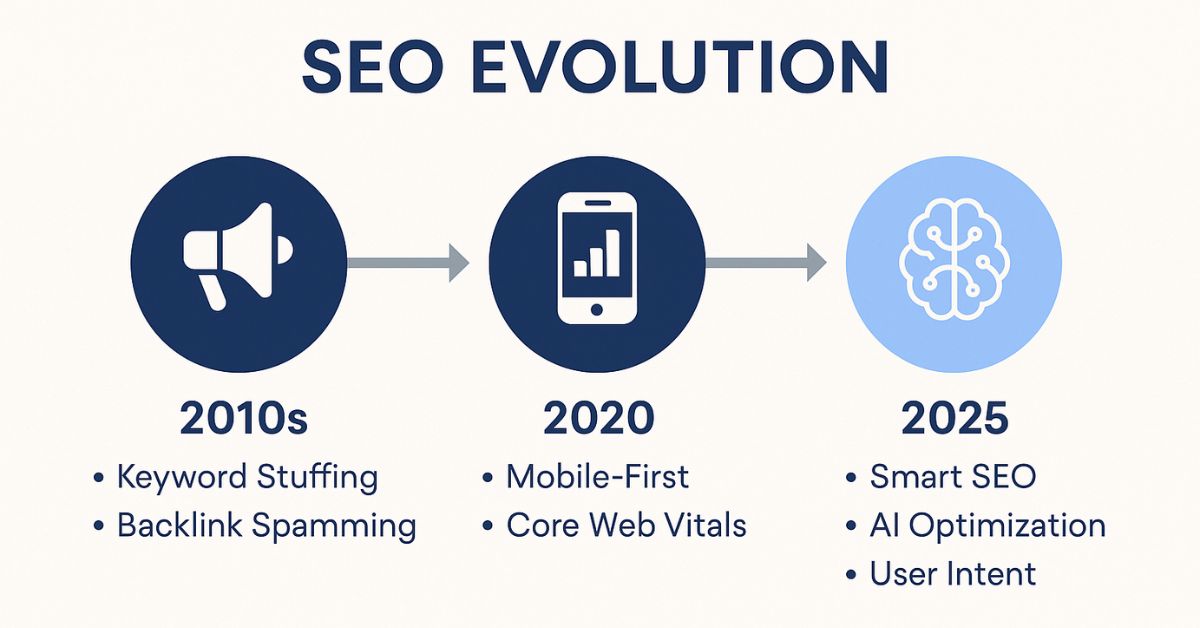
Smart SEO in 2026 means optimizing for two surfaces at once: the traditional Google SERP and AI-generated answers across ChatGPT, Perplexity, Gemini, and Google AI Overviews. Search behavior is shifting faster than most teams realize — AI Overviews now appear on roughly half of US informational queries, and inside those answers, only three to seven brands get named per question. Strategies that worked in 2023 (publish more pages, build more links, rank for more keywords) still matter, but they're table stakes. The strategies that compound in 2026 add an AEO layer to the SEO foundation.
This guide covers eight SEO strategies actively working for our 2026 clients (US legal, mobility, home services, e-commerce, SaaS), two strategies that have stopped paying off, and the priority order to deploy them. Built from active GSC and AI-citation data, not 2022 SEO theory.
What changed in SEO between 2023 and 2026
Three things changed materially:
- The "10 blue links" surface narrowed. AI Overviews compress informational queries into a single answer with 3-7 cited brands. Pages 1-2 are still there but capture less attention on informational intent. Commercial intent SERPs largely behave like 2023 still — SEO still works.
- Entity-level signals weight more than page-level signals. AI engines build entity models of your brand and decide whether to cite you based on entity strength, not just on which page ranks. This means About pages, schema, third-party mentions, and consistency across the web have outsized influence in 2026.
- Content structure for AI extraction is now a ranking lever. Definition leads, statistic-led sentences, comparison tables, FAQ sections — the formats AI engines prefer to extract — now correlate with both AI citation rates and traditional Google rankings (because Google AI Overviews are weighted into the same SERP).
Eight SEO strategies actively working in 2026
1. Build for both Google and AI engines (AEO baked in)
Every page you build or rewrite in 2026 should be optimized for both Google ranking and AI citation. The practical changes: lead with a one-paragraph definition the AI can extract verbatim, use statistic-led sentences with sourceable numbers, include comparison tables where applicable, add an FAQ block with FAQPage schema. None of this hurts traditional SEO — it strengthens it because Google's own AI Overview pulls from the same patterns.
2. Topical depth over keyword breadth
AI engines cite the brand that has 30 substantive pages on one topic, not 300 thin pages across 50 topics. Pick the 1-3 topics where you want to be the named expert, build 20-30 pieces of content clustered around a pillar page, and internal-link aggressively. This is the same advice from 2022 — but in 2026, the AI-citation upside makes it more valuable than ever.
3. Entity-clean schema across every page type
Organization on every page, plus the right page-type schema: Service on service pages, Article on blog posts, LocalBusiness for local pages, FAQPage where applicable, BreadcrumbList for nav structure. Schema is the structured channel AI engines read first. Missing or malformed schema is invisible.
4. Internal linking with entity intent
Link from cluster pages to the pillar; pillar to cluster; related posts to one another. Use descriptive anchor text that includes the entity ("local SEO services," not "click here"). Internal linking is the under-rated lever — it costs nothing, deploys in days, and signals topical authority to both Google and AI engines.
5. Earn third-party mentions (not just links)
AI engines weight third-party entity mentions, not just backlinks. A brand mentioned by name in five trusted vertical publications — even without a backlink — reads as a credible entity. Outreach in 2026 should pitch for mentions and quotes, not just for links. Links are still valuable; mentions are a new currency.
6. Original research and statistics
AI engines disproportionately cite sources of original statistics. If you can produce one piece of original research per quarter (a survey of your customer base, an analysis of your platform data, a benchmark from your industry vertical), the citation rate compounds across every adjacent topic. We've seen single original-research pieces drive AI citations on 10+ related queries for the next 12 months.
7. AI-cite-friendly content templates
The format AI engines prefer to cite is increasingly clear: short definition lead, immediate stats or numbers, comparison tables for product/service comparisons, structured how-to lists for procedural content, FAQ block at the end. Build templates for each content type and apply them consistently. See our LLM optimization guide for the full template library.
8. llms.txt at site root
An emerging standard. A simple text file at /llms.txt that lists your priority pages, content categories, and entity description. Most sites don't have one in 2026; getting ahead now compounds as the standard adopts more broadly. We auto-generate ours from our content map; the implementation is straightforward.
Two strategies that have stopped paying off
Mass content publishing for keyword volume
The "publish 5 posts a week to rank for everything" playbook is dead. Thin content competing on long-tail terms is now actively penalized by Google's quality signals and ignored by AI engines (which prefer depth over breadth). Fewer, better, longer pieces with original research and entity-clean schema outperform a high-velocity content factory in 2026.
Bulk link building / PBN / link farms
Low-quality link velocity has stopped working — Google's spam detection improved through 2024-25, and AI engines ignore these citation sources entirely. The link-building strategy that compounds in 2026: original content that earns links naturally, supplemented with selective niche edits and citations on real vertical publications. Slow, durable, defensible. See our AEO services page for our full link methodology.
The 2026 SEO priority order
| Priority | Strategy | Time to deploy | Time to results |
|---|---|---|---|
| 1 | Schema rollout (Organization, Service, FAQPage, Article) | 1-2 weeks | 30-60 days |
| 2 | AEO content template adoption on existing pillar pages | 2-4 weeks | 60-90 days |
| 3 | Topical depth on 1-3 priority topics | 3-6 months | 3-6 months ongoing |
| 4 | llms.txt + internal linking audit | 1-2 weeks | 30-60 days |
| 5 | Original research / proprietary statistics | Quarterly | 6-12 months compounding |
| 6 | Outreach for mentions + links (vertical pubs) | Ongoing | 3-12 months |
| 7 | Local SEO (if service-area business) | Ongoing | 30-120 days |
| 8 | Technical SEO audit + monthly maintenance | Ongoing | Continuous |
The bottom line
Smart SEO in 2026 isn't about chasing whatever's new — it's about applying SEO discipline to the surfaces that matter now (Google + AI engines) with content structured for both. The brands that win in this surface aren't the ones with the most pages or the most links. They're the ones with the cleanest entity, the deepest topical authority on a few priorities, and the AI-extractable content patterns to be cited where buyers are actually asking questions.
For the full execution playbook, see our SEO services or AEO services pages. Or grab a free AI search audit and find out which of these strategies will move your specific business in the next 30 days.
01 What's the most important SEO strategy in 2026?
02 Is SEO still worth doing in the age of AI search?
03 What SEO strategies stopped working in 2026?
04 How much should I invest in AEO (AI search optimization) vs traditional SEO?
05 How long does an SEO + AEO strategy take to show results?
06 What's the role of schema in 2026 SEO?
07 Should I be publishing more content or fewer better pieces?
08 What's llms.txt and do I need one?
09 How important is original research for SEO in 2026?
10 Do I need an SEO agency in 2026 or can I do this in-house?
Deepika Bhardwaj is the Founder of Max Growth Agency, where she helps businesses scale through strategic SEO, high-impact Content Marketing, and authoritative Digital PR. With years of hands-on experience in building organic visibility and brand trust, Deepika specializes in data-driven growth strategies that consistently deliver results.
Related posts

Why SEO Outsourcing Is a Smart Choice for Indian Startups in 2026
How AI SEO Agents Are Slashing Marketing Costs in 2026 — And Where They Don't
AI-Driven SEO Tools in Growth Marketing: The 2026 Stack That Actually Works
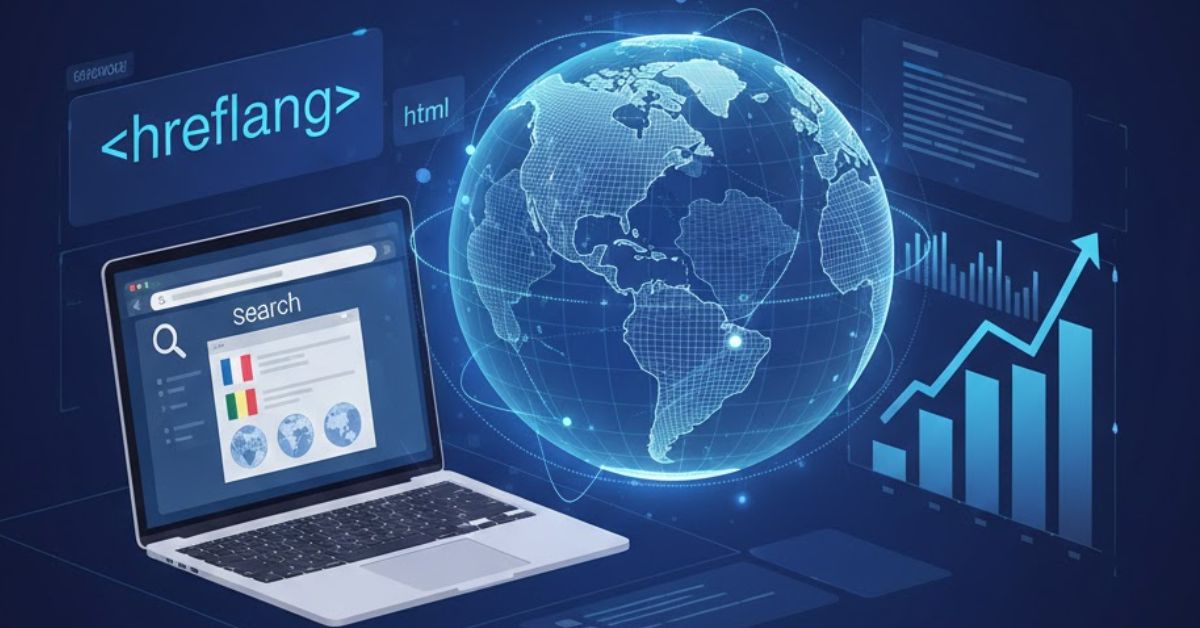
Hreflang Testing for Global SEO in 2026: Tools, 7 Common Errors, and a Full Audit Workflow
Get a free AI search audit.
We run your domain against ChatGPT, Gemini, Perplexity, and Google AI Overviews for 10 high-intent queries in your category. Short PDF, 48 hours, no sales call.
Email support@maxgrowthagency.com